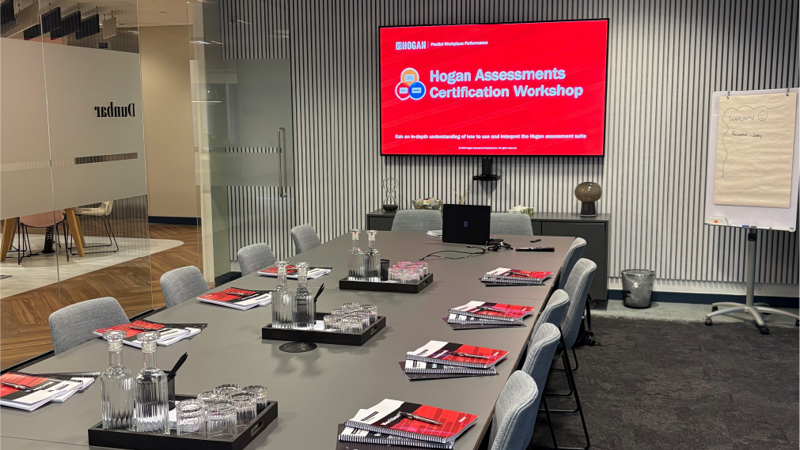
What does Hogan certification enable, and why is it increasingly on the radar of senior talent practitioners?
In the field of leadership, team, and culture interventions, “knowing people” is both art and science. For decades, practitioners have relied on narrative skill, deep listening, and accumulated intuition—while watching the evidence-base around personality assessment grow in complexity and influence. There’s a persistent question: where does validated evidence help us go further, faster, or with more precision?
The challenge is no longer the introduction of psychometrics itself, but how, when, and by whom these tools are used. Leaders want recommendations that stand up to scrutiny—commercially, relationally, and ethically. As the people agenda becomes more central to organisational risk and value, HR and OD practitioners are being asked: “Show us the working. Where does your judgement intersect with validated prediction?
What Is Hogan Certification?
Practically, Hogan certification signals an individual’s capacity to interpret and integrate the three core Hogan tools:
HPI: How a person is likely to show up in everyday (and high-stakes) contexts.
HDS: The subtle, often unseen derailers that emerge under pressure.
MVPI: The value base and cultural drivers that shape fit and satisfaction.
Certification isn’t just about access or administration. It’s about evidencing that your insight is technically grounded, aligned to real-world business need, and delivered in a way that advances the ethical use of personality data. For most, this marks a shift: not just “using Hogan,” but being trusted to translate evidence into the heart of critical decisions.
The Value of Certification—In Practice
Field-ready certification prompts a series of shifts:
Credibility: Recommendations become discussable beyond opinion—anchored in data, conversation, and context.
Practical Impact: Interventions are traced through to business outcome; development and selection are measurable, not just defendable.
Ethical Use: Clearer boundaries, less risk of misuse, and more confidence when personalities, potential, and risk intersect.
Career Value: Accreditation is increasingly a hygiene factor—clients and employers seek proof that both rigour and application are present.
Culture and Fit: Prediction isn’t only about can and can’t do, but also want to do, and will thrive doing—in the cultures we’re asked to steward.
When technical depth is absent, even well-intentioned assessments can fall flat—lost in translation, or misaligned with business priorities. Certification isn’t a guarantee of wisdom, but it does mark an intent: that reflection, data, and dialogue are in play, rather than compliance, personal taste, or preference.
For practitioners seeking to deepen their expertise, understanding the specifics of the HPI, HDS, and MVPI—and the certification pathways available—is a natural next move. For those who brief, commission, or sponsor assessment, knowing what this accreditation equips someone to do (and not do) is now part of due diligence.
Learn more about the underpinning models HPI, HDS, MVPI, the certification process.