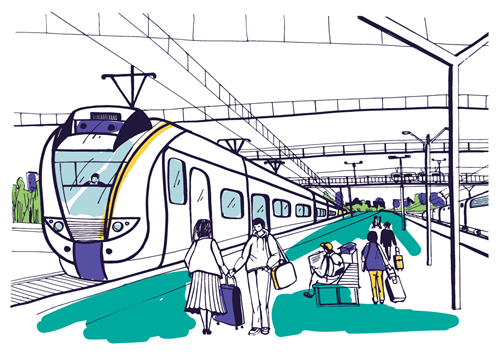
It’s 07:36 on a crowded platform and it’s just been announced that all morning trains into the city have been cancelled due to a signalling issue. There’s a ripple of movement as hundreds of passengers react to the news.
We’ve all been in similar situations. Cancelled trains, missed buses, a car that won’t start. How do people tend to respond in those moments? Do they immediately email the office? Open journey apps, scanning for alternative transport? Pace up and down, venting their frustration aloud?
Sometimes we’re not alone when disruption hits. What happens when you’re in a group—colleagues, friends, family—and everyone responds differently? The planner clashes with the panicker. The joker annoys the worrier. The pragmatist tries to rally the team, while someone else just wants to be left alone. Individual reactions collide. Tensions surface. What started out as one shared problem sparks a series of relationship conflicts.
And it’s not just on train platforms or neighbourhood streets. The same thing happens in meeting rooms, in project kick-offs, during any moment of sudden change at work - A key client postpones. Budgets are unexpectedly cut. New regulations land overnight. The plan everyone agreed on yesterday is thrown up in the air. Any disruption triggers ripples of reactions.
So, what if it’s not the disruption itself that derails high-performing teams, but the clash of what each person is naturally inclined to protect, prove or prioritise? What’s really at play in these moments are individual values—what Hogan describe as “the interests, motives, and drivers that shape what a person strives to attain in life.” Values set the agenda for what each person feels urged to defend or restore during disruption. They’re often unconscious, internalised early and rarely spoken aloud, but they govern the decisions people make—whether to stand firm, compromise, seek harmony, or push forward.
What it can look like
-
A manager driven by Security pushes to pause all non-essential activity when budgets tighten. If colleagues who value Aesthetics see their work deprioritised without discussion, this could lead to frustration and a drop in visible creative energy.
-
As a commercial opportunity emerges, a leader motivated by Commerce lobbies for a fast pivot toward high-value clients. Others, focused on Altruism, might actively resist, citing values misalignment. The impasse becomes a flashpoint for previously unspoken tensions—and focus drifts from execution to internal disagreement.
-
In urgent discussions, someone with a strong Power drive makes rapid, unilateral calls. Team members who favour Affiliation or Hedonism could disengage, pulling back from the conversation and shifting concerns to private side channels rather than addressing them upfront.
If leaders don’t know what really drives them, or those around them, are they likely to explore ways to explain the driving forces behind their decisions? Will they be equipped to understand why some people applaud their behaviour, whilst others barely tolerate it? And what’s at stake if they don’t develop these skills? Hogan notes, “Misaligned values between organisations and leaders, organisations and teams, or organisations and individuals can all cause workplace conflict.” In practice, this means projects stall, talented people move on, and energy gets lost to workarounds or silent disengagement. The cost isn’t always visible in the moment, but shows up through missed opportunities, hard-to-explain turnover, and outcomes that don’t match the team’s real potential.
What might help?
If these situations resonate, here’s some strategies we’ve seen move the needle:
-
Share individual leader MVPI profiles 1:1: Bring hidden drivers into awareness; give leaders language for their own instincts and blind spots, supporting better decision accountability in high-pressure moments.
-
Share anonymised MVPI profiles with teams: Make underlying team dynamics discussable in the open, diffusing personal judgement and helping uncover where value clashes explain recurring friction or misfires.
-
Map MVPI profiles against future team needs in recruitment and succession decisions: Surface where current values coverage is robust—or missing—so you can avoid reinforcing blind spots, build intentional diversity of drivers, and make sure appointments align with strategic direction.
Reference
Robinson, E. (2024). The Importance of Values | Hogan Assessments. [online] Hogan Assessments. Available at: https://www.hoganassessments.com/blog/the-importance-of-values/.