Reskilling & Upskilling
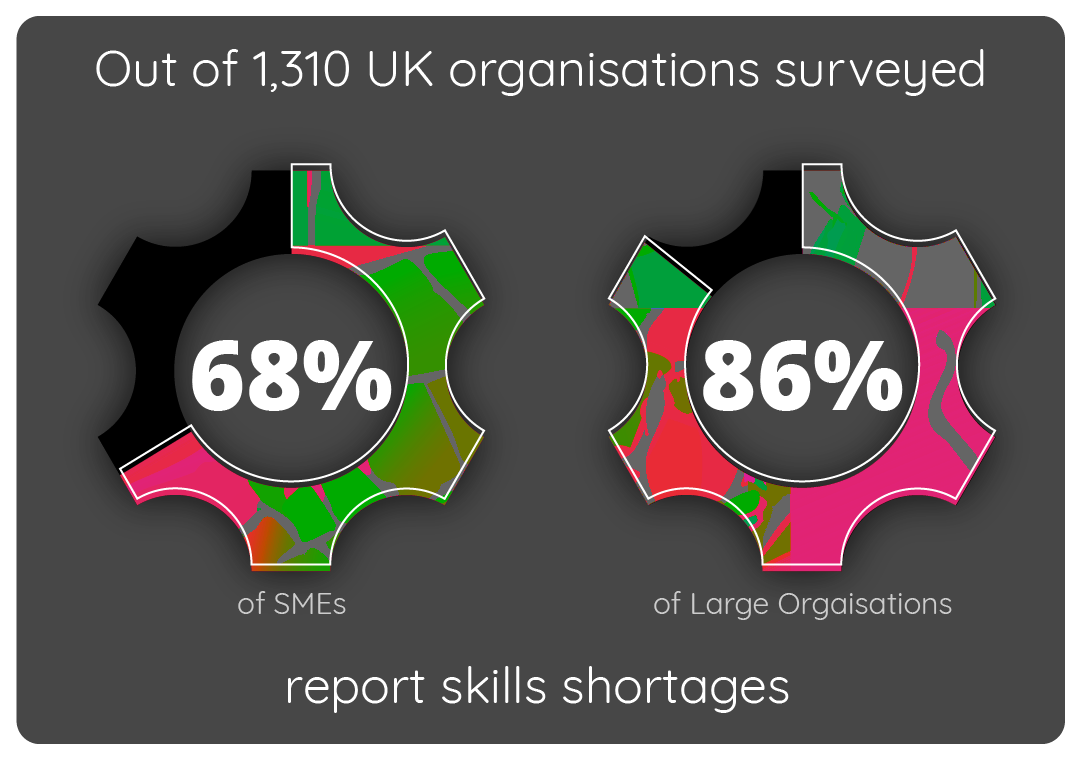
Are skills shortages affecting your business?
When market forces lead to shifts in commercial strategies, organisations face critical decisions regarding their workforce. These decisions can include geographic relocation, rapid expansion, redeployment of employees and redundancies.
With organisations striving to adapt, the scarcity of essential skills is becoming a pressing concern. Increasingly agile workforces are a necessity as many job tasks, and for some, the job itself become obsolete. In this rapidly evolving corporate landscape, business leaders face a critical question: who will guide us through the next 5 years?
Change is a constant
Macroeconomic shifts - such as political conflicts and changes to laws and regulations - have always disrupted the corporate world and forced businesses to address workforce capability:
- Digital Revolution (1947 - ).
- 2008 Global Financial Crisis.
- COVID-19 Pandemic (2019 - 2023).
- AI Revolution.
The advent of artificial intelligence (AI) has sparked a pivotal transformation in workforce dynamics. As organisations grapple with the integration of AI, the dilemma of reskilling current employees versus external recruitment becomes increasingly salient.
Reskilling/Upskilling vs. External Recruitment
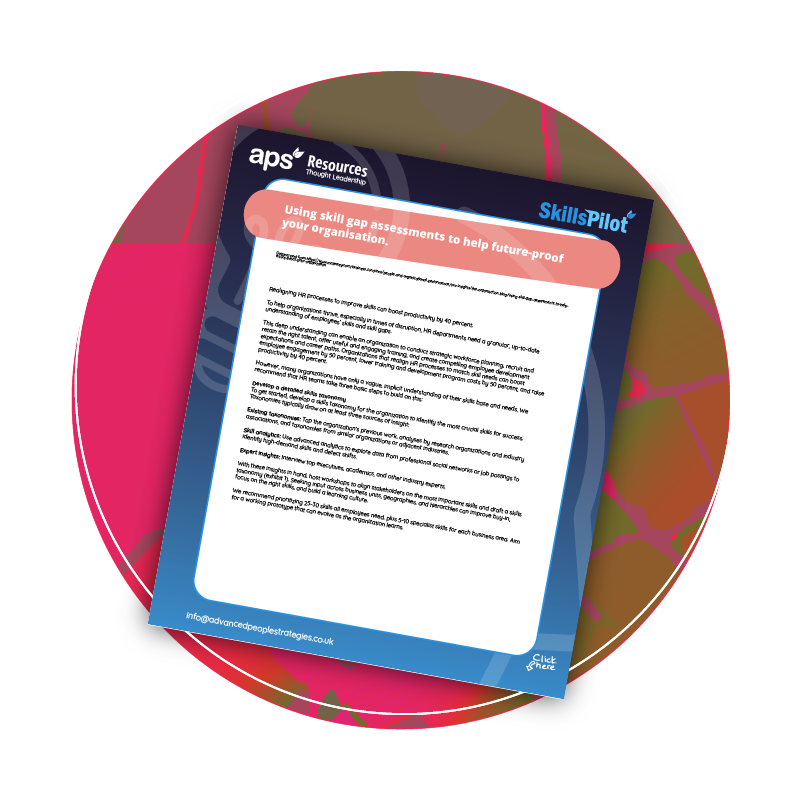
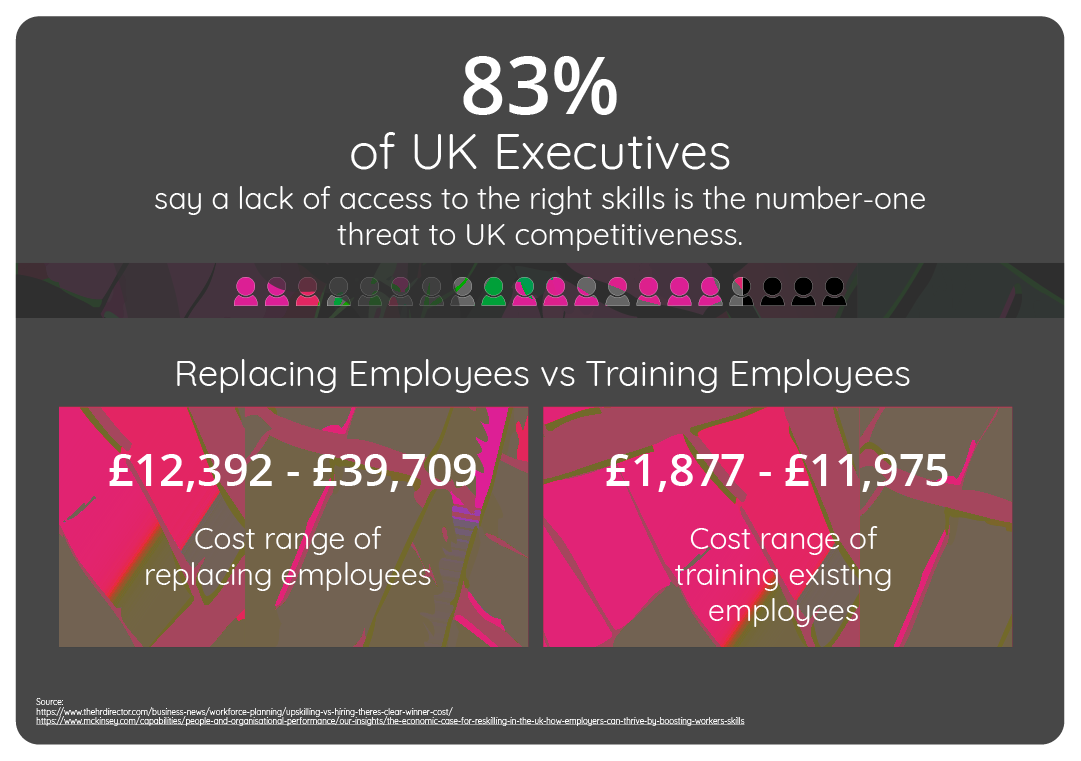
Effectively re-deploying staff to new areas or roles requires strategic upskilling, re-skilling and/or cross-skilling. By pinpointing learning and development needs and delivering training plans accordingly, businesses can retain the knowledge and expertise of existing staff, increase engagement and productivity and avoid undergoing costly processes associated with redundancies and re-hiring.
Find out more in our whitepaper:
In discussion with Kevin Green, CPO at First Bus in the UK.
Successfully Applying Reskilling Training Programs
When looking to apply successful reskilling training programmes, keep in mind the critical skills needed to drive value in line with the adjusted business model.
- Measuring Skills Gaps Interventions
- Set clear and measurable goals.
- Document specific skills that need to be acquired or improved.
- Ensure realistic timelines and deadlines are set.
- Develop structured resources.
Further Resources